

English
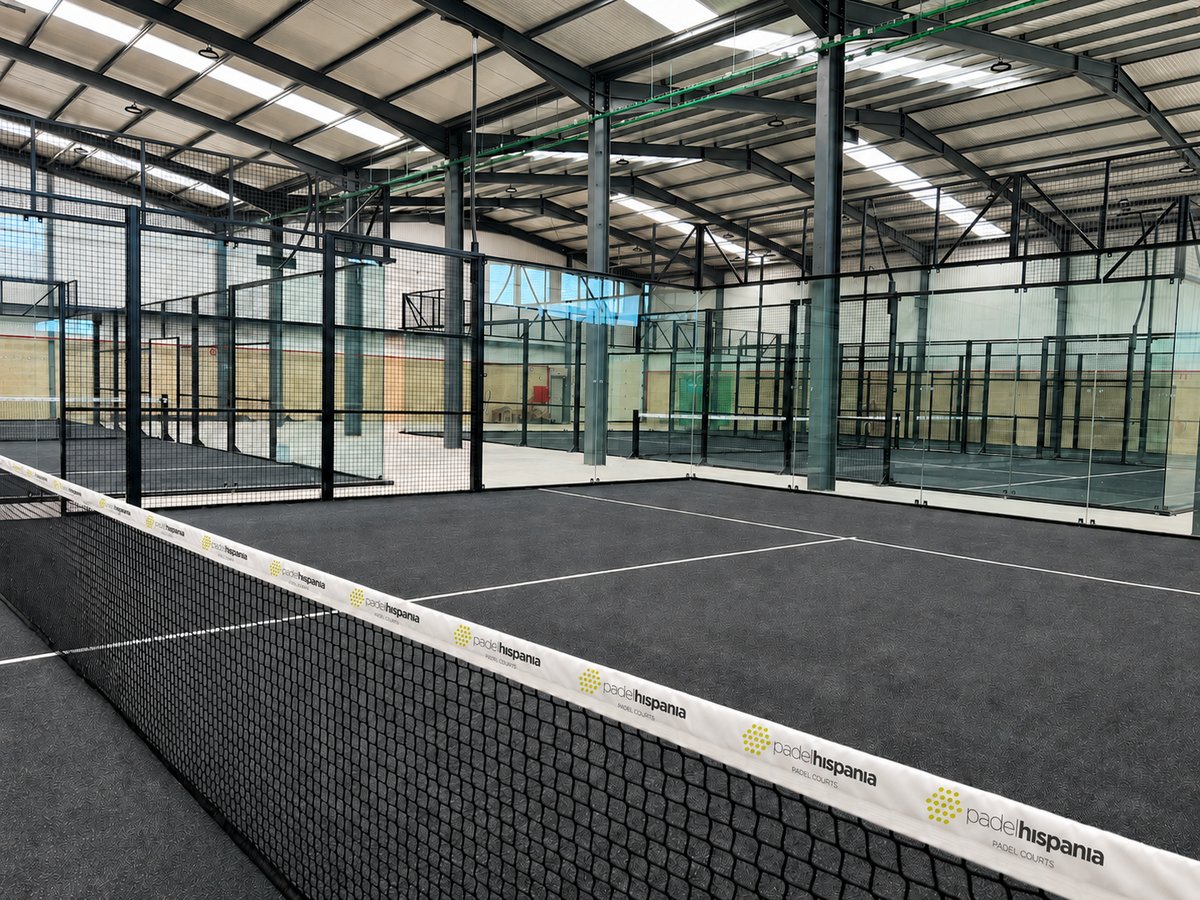
In this guide we break down the investment items, the factors that move the budget and the keys to profitability, so you decide with data, not intuition.
Building a padel club has become one of the most attractive sports investments of the last decade, but before taking the step every serious decision starts with the same question: how much does it cost to build a padel club, and when do I recover the investment? In this guide we break down the investment items, the factors that move the budget and the keys to profitability so you can decide with data, not with intuition.
Although every project needs a tailored quote, a useful starting reference is this one: the padel courts item usually falls, as a rough guide, in an approximate range of €20,000 to €25,000 per installed court, not including civil works, land, roofing, service buildings, licences or other club-specific costs. From there, the total investment will depend on the number of courts, the type of installation and the level of services you want to offer.
The investment items of a padel club
The total cost of a club depends on many variables, but it is always made up of the same building blocks. Understanding them is the first step to sizing your project.
1. The land or premises
You can build on your own plot, rent land or convert an industrial unit. The cost varies enormously depending on location and arrangement (purchase vs. rent). An industrial unit allows an indoor club; an outdoor plot reduces construction cost but exposes you to the weather.
2. Civil works and site preparation
Before installing any court you need a level, well-drained concrete slab, plus the development of the surrounding area (access, utilities). This is not an item to cut corners on: a poorly executed base compromises the entire installation.
3. The padel courts
The heart of the business. The cost per court depends on the type (panoramic, standard, indoor/outdoor), the quality of the materials (steel, tempered glass, turf) and whether it is covered or not. This is where the manufacturer's quality makes the difference between a court that lasts for years and one that gives trouble.
In a real project, it is not enough to look only at the manufacturing price of the court. To compare quotes correctly you have to take into account the chosen model, the type of turf, the glass, the structure, transport, installation and any additional finishes. That is why two apparently similar courts can differ significantly in durability, maintenance and playing experience.
4. Roofing and lighting
If you want to operate all year round and at any time —key to profitability— you will need a roof or cover and approved LED lighting. It lets you sell evening slots and rainy-day hours.
5. Service buildings
Reception, changing rooms, toilets, a café area or shop. The scope of these services defines the club's positioning (low cost vs. premium) and its ability to generate extra income.
6. Equipment and launch
Booking software, furniture, branding, launch marketing and working capital for the first few months.
How many courts do I need?
The number of courts is the decision that most conditions investment and profitability. A small club can start with 3-4 courts; clubs seeking sustainable profitability usually sit at 4 to 8 courts, because they allow leagues, tournaments and lessons to be organised without saturating availability.
In investment terms, this means that the courts item alone can represent approximately €80,000 to €100,000 for a 4-court club, €120,000 to €150,000 for a 6-court club and €160,000 to €200,000 for an 8-court club, always as indicative figures and without including civil works, land, roofing, changing rooms, café, licences or other complementary services.
This reference is useful for a first estimate, but it does not replace a technical quote. At Padel Hispania we analyse each project individually to fit the solution to the site, the intended use, the number of courts and the business model of the future club.
The rule of thumb: more courts spread fixed costs better (reception, maintenance, rent) and increase income per available hour, provided local demand justifies them. A prior local demand study is essential.
The profitability of a padel club rests on one central metric: occupancy per court and hour. The simplified calculation is:
Revenue = number of courts × available hours/day × % occupancy × price/hour
To that court-rental income you add complementary sources that greatly improve the ROI:
Well-located and well-managed clubs reach high occupancy in evening slots and weekends, which are the ones that sustain the P&L. Roofing is decisive: a club that cannot operate in rain or extreme heat loses billing days.
The factors with the greatest impact on the investment
To work out how much it costs to build a padel club, it is not enough to multiply the number of courts by a unit price. The court is one of the central items, but the final budget is built by adding up different elements.
An indicative example by club size
For an outdoor 4-court club, the investment in installed courts can start from an approximate range of €80,000 to €100,000, to which you would have to add site preparation, the slab, drainage, connections, fencing, lighting, licences and service areas.
In a more complete project, with 6 or 8 courts, user services, a café, a shop, common areas or roofing, the total investment can grow significantly. That is why, before making a decision, it is advisable to work with a preliminary study that lets you assess not only how much it costs to build the club, but also how many occupancy hours it needs to be profitable.
The most expensive mistake: cutting back on the court
Many projects cut where it is most visible to the player: the court. A low-quality court generates constant maintenance, service stoppages and a poor experience, which translates into customers who do not come back. In a business that lives on recurring occupancy, that is lethal. Investing in approved, durable courts is investing in long-term profitability.
In practice, an initial price difference can end up being irrelevant if the court causes incidents, requires frequent repairs or gives the player a poor experience. In a padel club, every hour a court is out of service is an hour that does not bill. That is why the correct analysis should not be made only on the purchase price, but on the total cost of the court over its entire useful life.
At Padel Hispania all our courts are certified by the Spanish Padel Federation, offering maximum quality and playing experience.
At Padel Hispania we manufacture and install padel courts for sports projects, clubs, hotels, municipal centres and investors who want to develop a profitable, lasting business. Our work does not stop at delivering a court: we support the client in choosing the most suitable model, configuring the materials, planning the installation and adapting the project to their real needs.
Every quote is studied individually, because the final cost depends on the number of courts, the location, the type of surface, logistics, installation and the overall scope of the project. This way of working lets the investor make decisions with data, avoid miscalculated items and build an installation ready to generate income from day one.
How much does it cost to build a padel club?
It depends on the number of courts, the land, the civil works, whether the club will be indoor, outdoor or covered, and the level of services you want to offer. As an initial reference, the installed courts item can sit at approximately €20,000 to €25,000 per court, not including civil works, land, roofing, licences or service areas. To know the real investment you need a quote adapted to the project.
For a four-court club, the installed courts item alone can range, as a rough guide, between €80,000 and €100,000. To that figure you would add civil works, site preparation, access, lighting, fencing, changing rooms, reception, licences and other start-up costs. That is why two 4-court clubs can have very different budgets depending on the type of project.
How many courts do I need to be profitable?
Usually between 4 and 8 courts, depending on local demand. More courts spread fixed costs better.
How long does it take to recover the investment?
The payback period depends on occupancy, the price/hour and the complementary income sources. A well-located and well-managed club, with roofing to operate all year, recovers the investment within a reasonable medium-term horizon.
Is an indoor or outdoor club better?
Indoor stabilises income by not depending on the weather, at the cost of a higher investment. Outdoor reduces construction but exposes billing to the weather. Roofing is a very profitable middle ground.
Does Padel Hispania handle the entire construction?
Yes. We offer turnkey installation: civil works, manufacturing and installation of the courts and finishes, in Spain and internationally.
Request a quote for your club
Do you want to know how much it would cost to build your padel club? Tell us how many courts you are planning, where the project will be located and what type of installation you need. At Padel Hispania we will prepare a tailored assessment to help you calculate the initial investment, choose the most suitable court and make decisions with a clear view of profitability.
Leave us your details and we will contact you shortly, with the aim of starting to work from the very first moment to build the padel court you need.
Submitting form. Please wait.
Error sending the form
Please try again.
Form submitted successfully!
We will contact you as soon as possible.